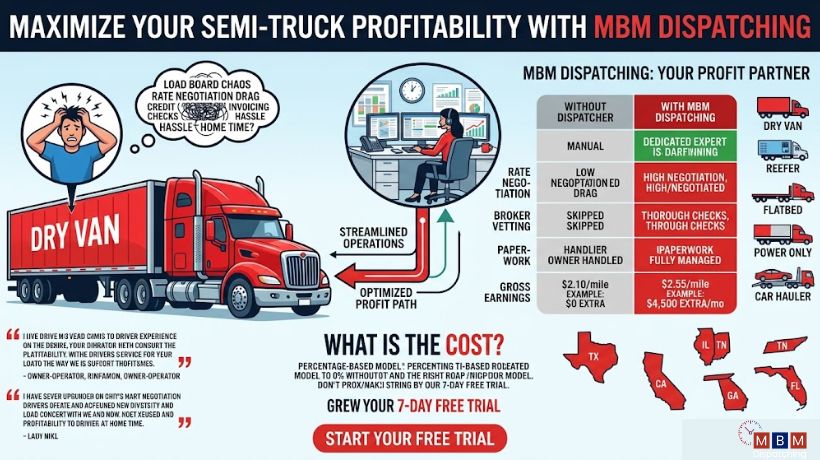
You didn’t buy a truck to spend your evenings staring at a load board.
But that’s where a lot of owner operators end up — refreshing DAT, arguing rates with brokers, chasing invoices, and wondering if the next load is even worth taking.
This article is for you if you’re running your own authority and want to know whether hiring a freight dispatcher is actually worth it — or just another cost eating into your margins.
No hype. Just straight answers.—
First, What Does a Dispatcher Actually Do?
A dispatcher is essentially your business partner — one who handles everything that isn’t driving.
That means:
- Finding loads that match your truck type and lanes
- Negotiating rates with brokers (so you stop accepting whatever they first offer)
- Running broker credit checks before you haul for anyone
- Handling rate confirmations, BOLs, and invoicing
- Being reachable when something goes wrong mid-route
The best dispatchers don’t just find you loads. They build a pattern of freight around your home base, your preferred states, and the kind of miles that actually make you money.
“A dispatcher’s job isn’t to keep your truck moving. It’s to keep your truck profitable.”
The Real Problem Most Owner-Operators Have
It’s not that loads don’t exist. There’s freight everywhere.
The problem is that brokers are trained negotiators. They open low because they know most drivers will accept rather than risk sitting empty. Over thousands of loads, those small rate differences compound into a massive income gap.
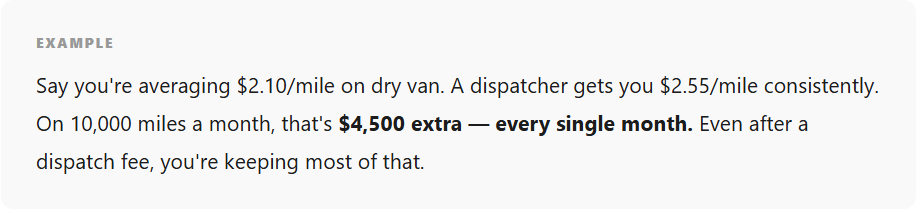
And that’s before accounting for the hours you’re no longer spending on the phone with brokers.
What Real Drivers Are Saying
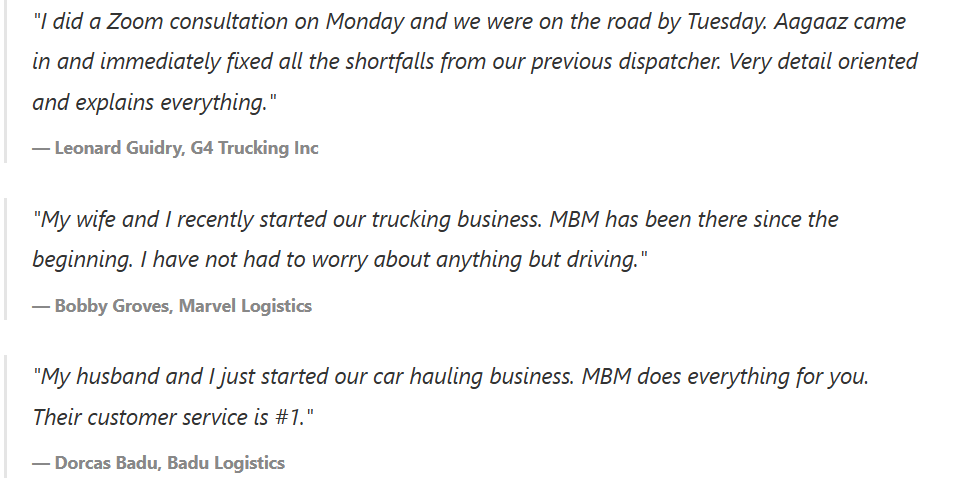
New owner operators, especially. The learning curve in this industry is steep — rates, lanes, broker relationships, compliance. Having someone in your corner from day one changes everything.
Who Is This For — and Who Isn’t It For?
This makes sense for you if:
- You’re an owner-operator running your own authority
- You drive Dry Van, Reefer, Flatbed, Power Only, or Car Hauler
- You want to stop negotiating and start driving
- You’re new and need someone who knows the market
- You’re experienced but feel like you’re leaving money on the table
It’s probably not for you if:
- You already have a dedicated shipper relationship and consistent freight
- You want full control over every load decision yourself
Doing It Yourself vs. Using a Dispatcher
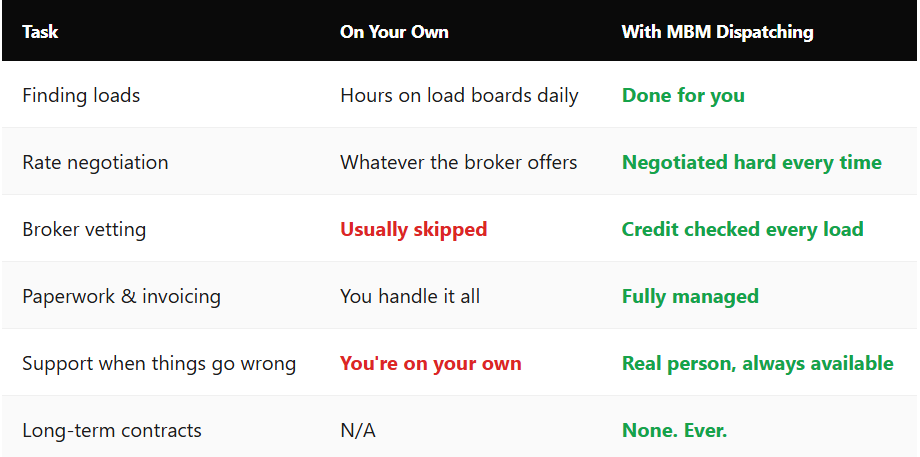
Which Truck Types Does MBM Dispatch?
MBM Dispatching works with:
- Dry Van — The most competitive market, but also the most loads. The difference between a mediocre and a great dispatcher is most visible here.
- Reefer — Temperature-sensitive freight pays a premium. You need a dispatcher who knows the food and pharma lanes.
- Flatbed — Steel, lumber, construction materials. Permit loads, oversized freight — this needs experience.
- Power Only — Drop and hook, minimal wait time, great CPM when dispatched right.
- Car Haulers — Auction to dealer, dealer to dealer. Loading plans matter. MBM knows this market.
Where They Operate
All 48 contiguous states. If you’re running lanes out of Texas, California, Florida, Georgia, Illinois, Tennessee, or anywhere in the Midwest and Northeast, they have broker relationships and load networks in those markets.
For new operators in high-competition states like California and Texas, especially, having a dispatcher with existing broker relationships is a serious edge over trying to build those connections yourself.
What Does It Cost?
Dispatch fees are typically a percentage of your gross load — usually in the range of 5–10%. No flat weekly charges that bleed you dry on slow weeks. No hidden fees.
And if you want to try it first, MBM offers a free 7-day trial. You get dispatched for a full week, see what loads they find for you, and decide for yourself.
That’s the kind of confidence a good service can afford to show.
People Also Ask
How does a freight dispatcher find loads for my truck?
Dispatchers use load boards like DAT and Truckstop, but more importantly, they leverage direct broker relationships built over time. MBM Dispatching has an established network of vetted shippers and brokers — which means access to loads that often never hit public boards, and rates negotiated from a position of trust rather than cold outreach.
Will I be locked into a long-term contract?
Not with MBM Dispatching. There are no long-term contracts. You can start, pause, or stop at any time. The free 7-day trial means you’re not risking anything to see if it works for you.
How much can I realistically earn as a professional dispatcher?
MBM’s clients average around $41,000/month in gross earnings. That number varies by equipment type, miles driven, and lanes — but the consistent pattern is that dispatched carriers earn more per mile than those negotiating loads themselves, because brokers know experienced dispatchers won’t accept below-market rates.
Do I need an MC number to work with a dispatcher?
Yes — you need an active USDOT number and MC authority to haul freight for hire. If you’re just starting out, MBM’s business consultation service can help you get set up correctly from the beginning.
What’s the difference between a dispatcher and a freight broker?
A broker connects shippers with carriers and takes a cut of the load. A dispatcher works for you — the carrier — to find the best loads, negotiate your rate, and manage your operations. Their incentive is your success, not the middle margin. MBM Dispatching is firmly on the carrier’s side.